In wire harness and cable assembly manufacturing, the crimp is one of the smallest components in the system and one of the most critical. A single compromised crimp can lead to electrical failure, safety risk, production downtime, or costly recalls.
Yet crimp quality is often assumed rather than verified.
Crimp analysis provides manufacturers with a clear, measurable way to validate termination quality before failures occur. By looking inside the crimp instead of judging it from the outside, manufacturers gain insight that protects production, improves consistency, and supports compliance in demanding industries.
Why Crimp Quality Cannot Be Assumed
A crimp can look acceptable from the outside and still fail under real world conditions. Surface inspection alone cannot reveal what is happening inside the conductor and terminal interface.
Common issues that go unnoticed without analysis include:
- Improper conductor compaction
- Insufficient or excessive crimp height
- Strand damage or missing strands
- Voids that weaken electrical continuity
- Burrs or deformation that lead to fatigue failure
Over time, these issues can cause increased resistance, heat buildup, intermittent connections, or complete failure. The cost is rarely limited to a single part. It often shows up later as scrap, rework, warranty claims, or customer dissatisfaction.
What Crimp Cross Section Analysis Reveals
Crimp cross section analysis allows manufacturers to cut, polish, and examine a crimped termination at the microscopic level. This process removes guesswork and replaces it with measurable data.
Key measurements typically include:
- Conductor compaction percentage
- Crimp height
- Crimp width
- Inside and outside crimp trace area
- Burr width and deformation
- Strand count and distribution
- Terminal wall formation and symmetry
These measurements confirm whether the crimp meets design intent, terminal manufacturer guidelines, and industry standards. More importantly, they provide confidence that the termination will perform consistently over time.
Preventing Defects Before They Reach Production
One of the greatest advantages of crimp analysis is its ability to prevent problems before they occur.
When crimp quality issues are identified early, manufacturers can:
- Adjust tooling before defects multiply
- Validate applicator performance
- Confirm correct wire and terminal pairing
- Reduce scrap and rework
- Avoid downstream failures
Instead of reacting to quality problems after production has started, crimp analysis allows teams to proactively lock in reliable processes.
Supporting Compliance in Critical Industries
Industries such as automotive, electric vehicle, aerospace, medical device, and industrial manufacturing operate under strict quality and compliance requirements. Crimp analysis provides documented evidence that terminations meet those expectations.
This documentation supports:
- Internal quality audits
- Customer validation requirements
- Process qualification and PPAP support
- Long term traceability
For manufacturers supplying regulated or safety critical markets, crimp analysis is not optional. It is a safeguard.
The Role of Tooling in Crimp Quality
Crimp analysis often reveals that quality issues are not caused by the operator but by tooling that is worn, mismatched, or improperly configured.
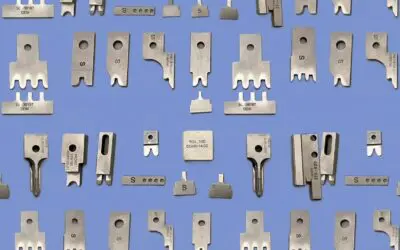
Perishable tooling that is past its service life can subtly degrade crimp quality long before visible failure occurs. Custom tooling that is properly engineered for the application produces more consistent results and extends tool life.
By pairing crimp analysis with properly designed tooling, manufacturers gain full control over termination quality.
Why Diamond Die Takes Crimp Quality Seriously
At Diamond Die, crimp analysis is treated as a practical production tool, not just a lab exercise. It is used to help manufacturers:
- Validate new tooling and applicators
- Troubleshoot quality issues quickly
- Reduce risk when scaling production
- Support compliance without slowing operations
By combining precision tooling with detailed crimp analysis, Diamond Die helps customers move forward with confidence, knowing their terminations are built to perform.
Crimp Analysis as a Long-Term Advantage
Crimp analysis does more than solve immediate problems. It strengthens processes over time.
Manufacturers that use crimp analysis consistently benefit from:
- Lower total cost of ownership
- Improved production stability
- Fewer unexpected failures
- Stronger customer trust
In an environment where uptime and reliability matter, understanding what is happening inside the crimp makes all the difference.
Final Thought
Crimp failures are rarely random. They are usually the result of issues that were never fully visible. Crimp analysis brings those issues into focus before they become costly.
For manufacturers who cannot afford downtime, defects, or compliance risk, crimp analysis is one of the smartest investments they can make.